Search Death Records (United States)
 U.S. Newspapers, 50 State Full Search (1690-present)
- U.S. Obituary Database Search, (1696-present)
- U.S. Birth Announcements Database, (1700s-present)
America's Boot Hill Graveyards
by Steve Johnson
October 2, 2010
 The
name "Boot Hill" often conjures up images of lawlessness
in the rugged Old West of the 1800's. Many movie westerns seemed
to have romanticized the trials and tribulations of the "cowboy"
who met their fate too early in life. Gunslingers, lawmen, and bank
robbers all shared company in the hills outside of restless towns
throughout the Old West.
The
name "Boot Hill" often conjures up images of lawlessness
in the rugged Old West of the 1800's. Many movie westerns seemed
to have romanticized the trials and tribulations of the "cowboy"
who met their fate too early in life. Gunslingers, lawmen, and bank
robbers all shared company in the hills outside of restless towns
throughout the Old West.
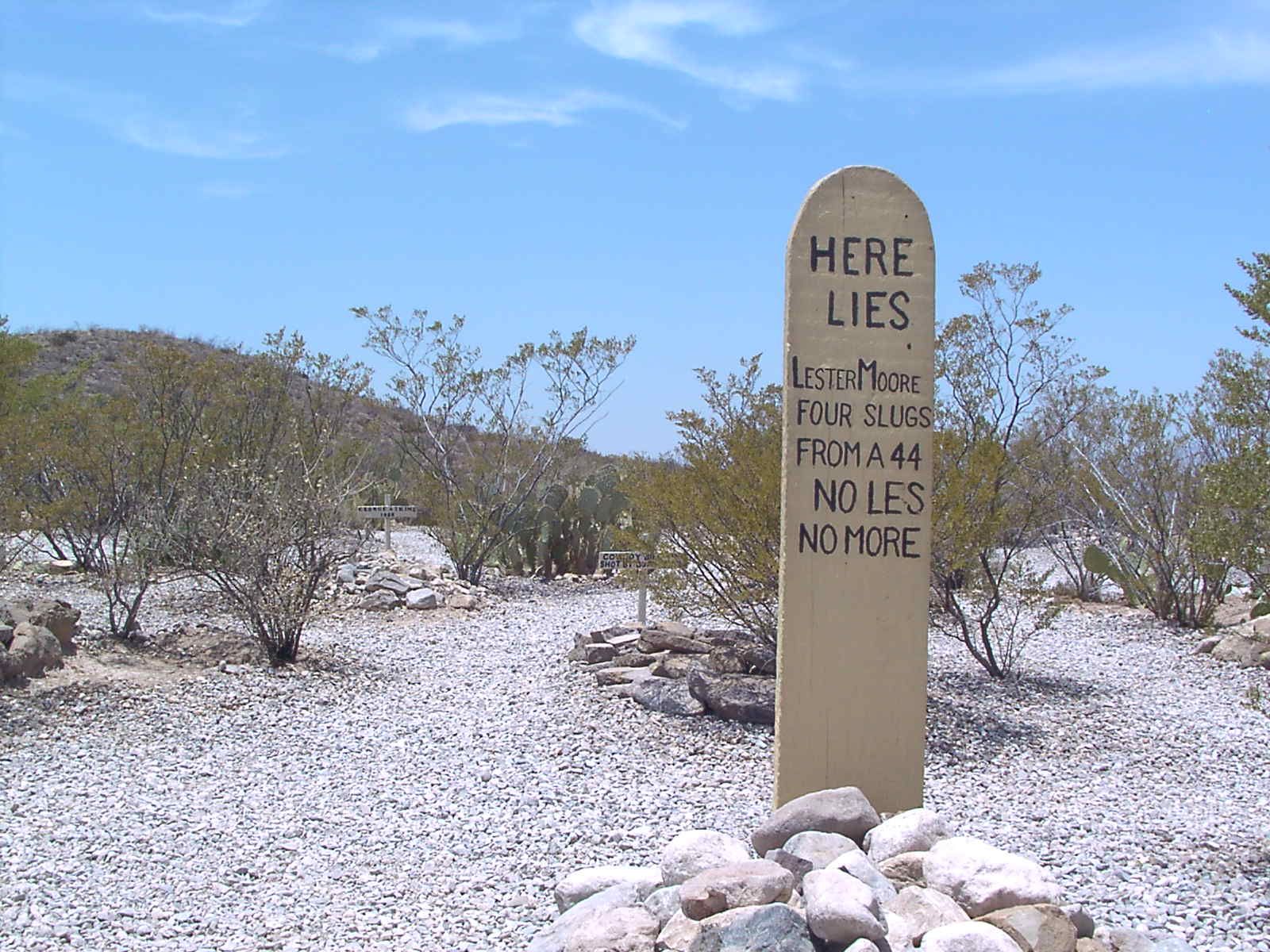
The term, "Boot Hill" is used to describe a cemetery, typically located in towns throughout the western territories of the United States, where lawlessness flourished. While many towns in the western United States had cemeteries, only those that were known for violence used the term "boot hill".
The name itself is somewhat of a humorous commentary. So many men were being killed in these towns that local residents had little time to give them proper funerals. Hence they were, "buried with their boots on".
Towns that sported boot hill graveyards were typically those that attracted a lot of people with no family. As people died, there was no one to claim the bodies, and hence no reason to host a funeral service.
Dodge City, KS had been a starting point for people travelling west along the Santa Fe Trail. Tombstone, AZ, Virginia City, MT, and Calico, CA were mining settlements. These towns added saloons, brothels, and theatres to cash in on the large numbers of single men working or passing through these towns.
Originally, settlers had buried their dead at Army Forts located throughout the territories. But when lawlessness set in, and people were being killed faster than they could bury them, the need for a local cemetery became clear. Hence, the boot hills.
The boot hills ultimately became predecessors to larger, more formal cemeteries. They fulfilled an immediate need until a permanent cemetery could be established. The boot hill graveyard in Tombstone, AZ was used only for six years until the present day "Tombstone Cemetery" was established. The boot hill in Deadwood, South Dakota, known as "Ingleside", was used only for two years until the permanent "Mount Moriah" was established. Interestingly, Ingleside went forgotten and most people today refer to Mount Moriah as "Boot Hill".
Other towns converted their boot hills into formal cemeteries, such as that in Calico, California. There were also towns that had boot hills but never called them by that term, such as that in Bodie, CA.
Many of the boot hill graveyards do not exist anymore, having been erased by time and Mother Nature. The boot hills you visit in places like Tombstone, Arizona, Dodge City, Kansas, and Virginia City, Montana, were all rebuilt and are used as tourist attractions.
Originally, many of the dead were not given gravemarkers, only those rare few who had surviving family, or prominent townsfolk, were given markers, and these markers were almost always made of wood. The grave markers you see at many boot hills today are not original. Local historical societies, and restoration groups have painstakingly researched the burial plots of the deceased and planted new markers.
Recently, many old west towns have rebuilt themselves into tourist attractions, and renamed their original graveyards as "boot hill" for additional tourist interest, when in fact they were never used as such. And these days people tend to use "boot hill" loosely to describe any old abandoned graveyard they find lying out in the vast expanses of western USA.
Some boot hill graveyards featured here on Interment.net...